



Root Cause Analysis of Premature Electrical Motor Failures
Client: Comstar Automotive Technologies, Chennai Plant
📌 Background
At the Chennai manufacturing facility of Comstar India, a recurring issue of unexpected electrical motor failures was observed across critical production lines. These failures occurred significantly before the designed service life, leading to unplanned downtime, production losses, and increased maintenance costs. The problem was particularly concerning in motors operating under humid and semi-exposed industrial conditions.
🔍 Problem Statement
The motors exhibited:
- Premature insulation breakdown
- Abnormal noise and vibration
- Reduced efficiency and overheating
- Sudden operational failure without prior warning
The challenge was to identify the root causes behind these early failures and recommend corrective strategies to enhance reliability and lifecycle performance.
🧪 Methodology & Investigation
A systematic Root Cause Analysis (RCA) approach was adopted, combining field inspection, failure diagnostics, and engineering analysis:
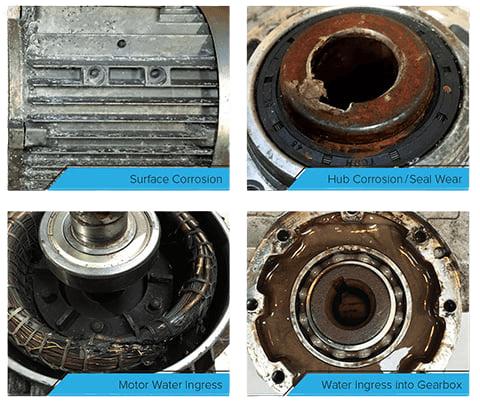
- Visual & Microscopic Inspection: Examination of failed motors revealed rust formation, pitting, and moisture traces on stator windings and rotor assemblies.
- Electrical Testing: Insulation resistance and winding integrity tests confirmed degradation due to moisture-induced dielectric failure.
- Material & Surface Analysis: Corrosion patterns indicated prolonged exposure to water ingress and humid environments.
- Vibration & Fatigue Analysis: Bearings and rotating components showed signs of fatigue wear, exacerbated by misalignment and contamination.
- Environmental Assessment: Plant conditions, including wash-down practices and inadequate sealing, contributed to water penetration into motor housings.
⚠️ Key Root Causes Identified
- Water Ingress:
Ineffective sealing (IP rating limitations, gasket wear) allowed moisture entry into motor enclosures. - Corrosion Mechanisms:
Presence of water led to electrochemical corrosion of metallic components and insulation deterioration. - Material Degradation:
Insulation materials were not adequately resistant to high humidity and chemical exposure. - Mechanical Fatigue:
Repeated cyclic loading and contaminated lubrication caused bearing fatigue and shaft wear, accelerating failure. - Maintenance Gaps:
Lack of predictive maintenance and delayed detection of early-stage degradation.
💡 Recommendations & Solutions
- Enhanced Sealing & Protection: Upgrade to higher IP-rated motors and improved gasket materials.
- Protective Coatings: Application of anti-corrosion coatings and moisture-resistant insulation systems.
- Environmental Controls: Redesign of wash-down procedures and installation of protective enclosures.
- Predictive Maintenance: Implementation of AI-driven condition monitoring (vibration, temperature, insulation health).
- Design Improvements: Adoption of corrosion-resistant materials and robust bearing systems.
📈 Impact & Outcomes
The study provided a clear understanding of failure mechanisms and enabled:
- Reduction in unexpected motor failures
- Improved operational reliability and uptime
- Optimized maintenance strategies
- Extended motor service life
🚀 Conclusion
This case study highlights the importance of integrated engineering diagnostics and data-driven RCA in industrial environments. By addressing water ingress, corrosion, and fatigue collectively, the reliability of electrical motors can be significantly enhanced, ensuring cost-effective and sustainable plant operations.